How to Choose a Lung Health Supplement After 50: 6 Things to Check on the Label
Why the Label Matters More Than the Box
The lung health aisle is crowded, and the front of every box reads the same: natural, powerful, trusted. The back of the box is where products actually differ. US labeling rules require every dietary supplement to carry a supplement facts panel and the name and address of the company behind it, so the information you need to compare products is printed on the bottle. You just need to know where to look.
If you are still building the daily habits that support breathing after 50, start with our guide on how to support healthy lung function after 50. A supplement is a helper next to those habits, not a replacement for them.
The 6 Checks
- 1. Every ingredient is named on the supplement facts panel. Many formulas group ingredients into a "proprietary blend." That is allowed, and FDA labeling rules still require the blend's total weight and every ingredient in it, listed from most to least by weight. Nutrients that have a Daily Value, such as magnesium, must also appear on their own line with an exact amount. If you cannot tell what is inside, put it back.
- 2. The ingredient forms are spelled out. "Magnesium" tells you less than "magnesium glycinate," and "turmeric" tells you less than "turmeric extract standardized to 95% curcuminoids." A label that names the form shows the maker thought about how each ingredient is delivered, not just what to call it.
- 3. The dosing is simple enough to keep. Results from any daily formula depend on taking it every day for weeks. One capsule a day, with no stimulants or caffeine, is the kind of routine people are still following in month three.
- 4. A real company stands behind it. Look for a company name, a physical address and a working support line or email on the label. A product you can trace to an identifiable business is one you can actually reach if something goes wrong with an order.
- 5. The guarantee gives you time to decide. A daily formula needs weeks, not days, so a 14-day return window is not much use. Look for at least 60 days, and make sure the purchase is one-time rather than an automatic monthly subscription.
- 6. You are buying from the official order page. Popular supplements attract look-alike websites with similar names and their own checkouts. The manufacturer's guarantee usually applies only to orders placed through its official page, so use the link from a source you trust.
Two Red Flags Worth Walking Away From
Promises to treat a disease. Supplements are not allowed to claim they treat, cure or prevent asthma, COPD or any other condition. A product that hints otherwise is telling you something about how it is marketed. Diagnosed conditions belong with your doctor.
Inhaled "detox" products. The American Lung Association advises against inhaled detox products, pointing out that the lungs clean themselves once they are no longer exposed to pollutants and that some inhaled products can do harm. A once-a-day capsule with a full label is the simpler route.
How Lungora Measures Up
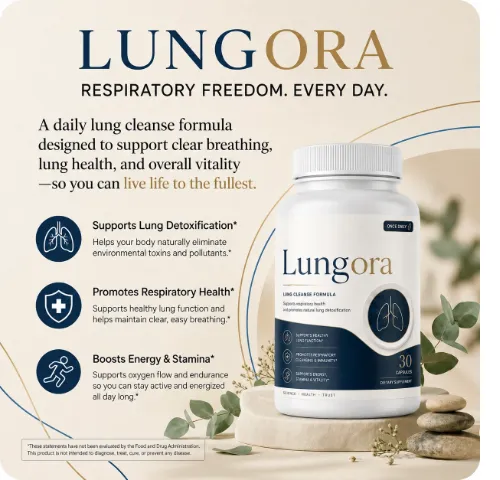
We ran the same six checks on Lungora, the formula we reviewed in depth:
- Full panel: a 575 mg blend with all six ingredients named, and magnesium listed on its own line at 80 mg, exactly as the labeling rules require.
- Named forms: magnesium as glycinate and turmeric standardized to 95% curcuminoids.
- Simple dosing: one vegetable capsule a day, no stimulants, no caffeine.
- Real company: a Colorado address, phone line and support email printed on the label.
- Guarantee: 60 days on every package, sold as a one-time purchase.
- Official page: orders go through a secure BuyGoods checkout, and the 3- and 6-bottle packages ship free in the US.
Six Checks, Six Passes
See the full label, what each ingredient does and who it suits in our review, or go straight to the packages and the cost per day on the pricing page.
Read the Full Lungora Review →Frequently Asked Questions
What should I look for in a lung health supplement?
Start with the supplement facts panel: every ingredient should be named, with nutrients such as magnesium listed on their own line with an amount. Then check the ingredient forms, how many capsules a day it takes, whether a real company with an address stands behind it, the length of the money-back guarantee, and that you are buying from the official order page.
What does proprietary blend mean on a supplement label?
It means several ingredients are grouped under one total weight. FDA labeling rules still require the total weight of the blend and every ingredient in it, listed from most to least by weight, and any nutrient with a Daily Value, like magnesium, has to be listed separately with its own amount.
Can a supplement treat asthma or COPD?
No. Dietary supplements are not allowed to claim they treat, cure or prevent any disease, and a diagnosed condition needs a doctor. A well-made lung health supplement is positioned as daily support for normal, healthy function, alongside habits like regular activity and avoiding smoke.
Are inhaled lung detox products a good idea?
The American Lung Association advises against relying on inhaled detox products, noting the lungs clean themselves once they are no longer exposed to pollutants and that some inhaled products can be harmful. If you want a daily supplement, a once-a-day capsule with a full label is the simpler, lower-risk route.